The “Fed-Watch” Fever: Gold, Guilt-Edges, and the Independence Gambit

January 27, 2026 

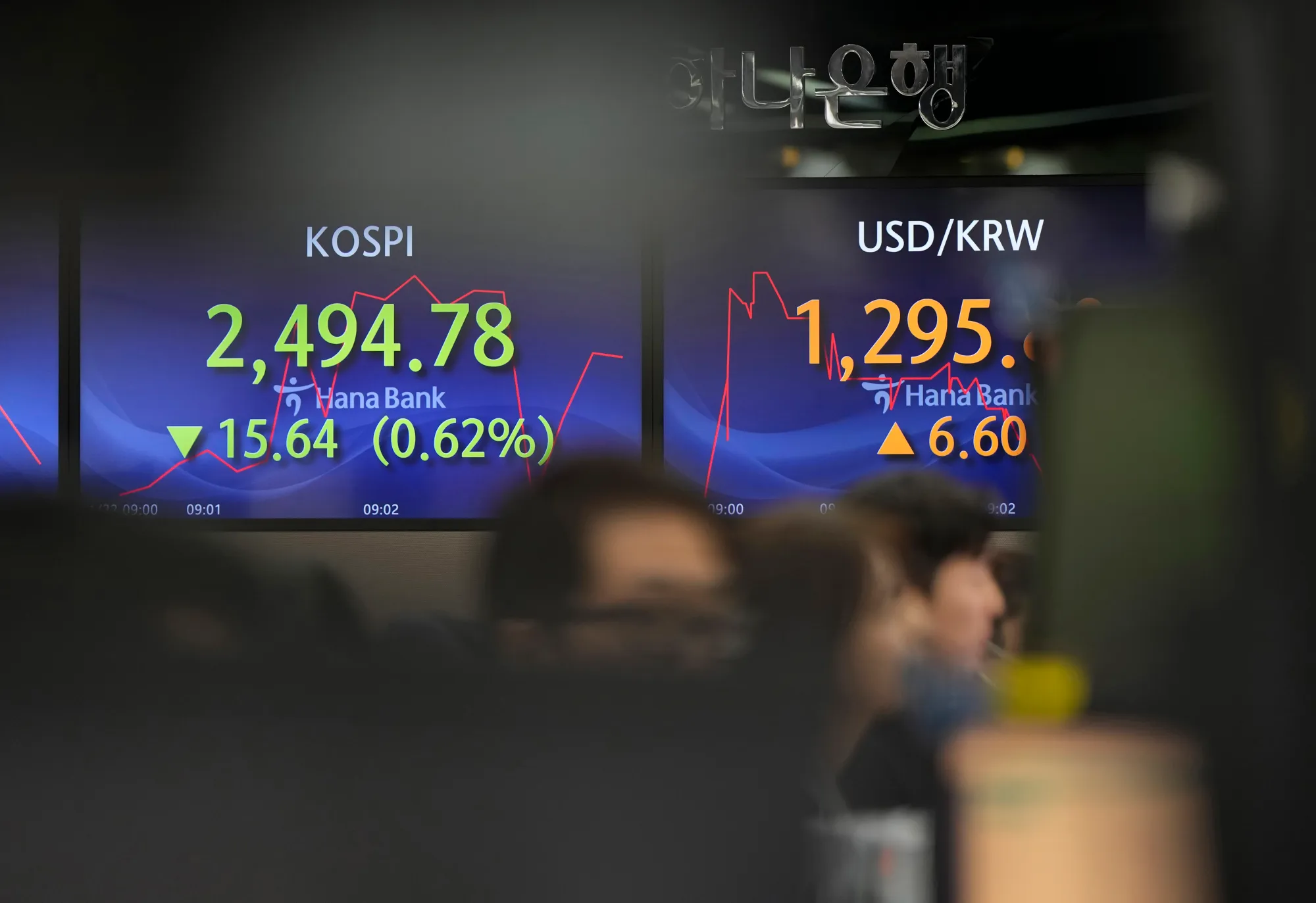
The market is on edge as the Federal Reserve’s January policy meeting gets underway today. After a strong Monday session where major U.S. equity indices, including the S&P 500 and Dow, finished higher, sentiment remains mixed ahead of key economic data and policy signals. Spot gold has climbed to record highs above $5,100 per ounce on strong safe-haven demand and dollar weakness, reflecting persistent geopolitical and macroeconomic uncertainties rather than just Federal Reserve expectations.

Attention today is firmly on the Fed’s decision, with markets widely expecting the federal funds rate to be held steady at current levels. Commentary from analysts suggests markets will be watching the Fed’s outlook on inflation and growth closely, especially during Chair Jerome Powell’s press engagement following the announcement. Markets are pricing in that the central bank will remain cautious rather than aggressively shift policy in either direction this week.

U.S. Treasury yields and the dollar have shown volatility as traders balance expectations for monetary policy with broader global risks. While yields have not moved uniformly, bond markets continue to signal caution ahead of the Fed statement and upcoming Treasury auctions.

Credit markets are displaying resilience, and corporate bond spreads have tightened in recent sessions, suggesting fixed-income investors are not yet pricing in a severe downturn. Some banking stocks have seen share weakness due to concerns about interest income and credit quality, but this is part of broader sector rotation rather than a systemic credit crisis. 

In the tech sector, themes of artificial intelligence investment continue to support valuations, with infrastructure and cloud-related plays drawing fresh capital even as cyclical sectors face headwinds. Despite macro uncertainty, many analysts point to strong earnings expectations as a key driver behind equity strength this earnings season. 

For consumers and markets alike, the January Conference Board Consumer Confidence index will be a focus today. Expectations are that the report will provide insight into household sentiment amid a resilient job market and moderating, though persistent, inflation pressures. This figure will help assess whether consumer spending remains a stabilizing force for U.S. economic growth.

Markets remain fundamentally uncertain and reactive rather than directional. The coexistence of record gold prices alongside solid equity performance suggests investors are balancing risk assets with defensive positions. Over the next 48 hours, the main risks revolve around communication clarity from policymakers, incoming economic data, and how markets interpret the Fed’s stance on inflation and growth.


References

Forex.com. (2026, January 26). S&P 500 Forecast: SPX rises ahead of Mag 7 earnings & FOMC decision this week. https://www.forex.com/en-ca/news-and-analysis/s-p-500-forecast-spx-rises-ahead-of-mag-7-earnings-fomc-decision-this-week/

Invesco. (2026, January 26). Four key market signals to watch. https://www.invesco.com/us/en/insights/market-signals-investors-watch.html

Investing.com. (2026, January 26). Trump speech and consumer confidence highlight Tuesday’s economic calendar. https://www.investing.com/news/stock-market-news/trump-speech-and-consumer-confidence-highlight-tuesdays-economic-calendar-93CH-4465810

Kiplinger. (2026, January 26). January Fed Meeting: Live Updates and Commentary. https://www.kiplinger.com/investing/live/january-fed-meeting-live-updates-and-commentary

Manila Times. (2026, January 27). US stocks rise as gold hits another record and the dollar’s value sinks again. https://www.manilatimes.net/2026/01/27/business/foreign-business/us-stocks-rise-as-gold-hits-another-record-and-the-dollars-value-sinks-again/2265644

Morningstar. (2026, January 14). Financials Down After BofA, Wells, Citi Earnings — Financials Roundup. https://www.morningstar.com/news/dow-jones/202601148751/financials-down-after-bofa-wells-citi-earnings-financials-roundup

The Jakarta Post. (2026, January 27). Stocks up as earnings hopes offset Trump’s Korea tariff move, dollar wobbles. http://www.thejakartapost.com/business/2026/01/27/stocks-up-as-earnings-hopes-offset-trumps-korea-tariff-move-dollar-wobbles.html

Other News and Insights

November 19, 2025

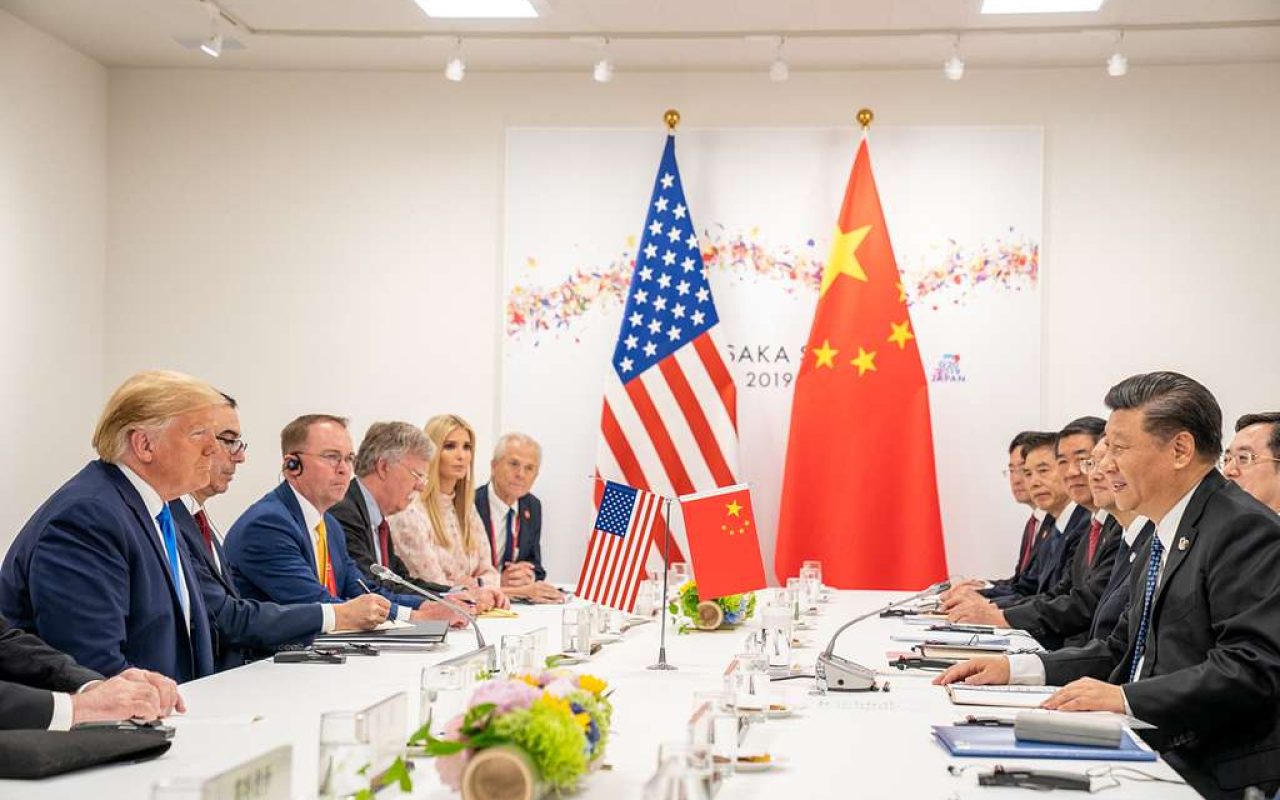
The economic relationship between the United States and the Association of Southeast Asian Nations (ASEAN) is increasingly shaped by the tension between Washington’s push for deeper strategic cooperation and ASEAN’s emphasis on multilateral economic integration. Following the ASEAN Summit, the U.S. move toward more reciprocal trade arrangements has sought to influence regional supply chains by linking preferential market access with broader strategic commitments (Brownstein, 2025). Under this approach, ASEAN members that have formal agreements, such as Malaysia and Cambodia, and those participating through frameworks, such as Vietnam and Thailand, remain within the U.S. reciprocal tariff regime but may receive targeted exemptions. This has created a differentiated tariff landscape influenced by each country’s alignment track record rather than purely economic considerations (Dezan Shira & Associates, 2025).

This tiered structure places ASEAN in a difficult position despite its demonstrated economic resilience. While the United States is ASEAN’s fourth-largest trading partner, the region’s trade with China is more than twice that volume, underscoring Beijing’s central role in regional production networks (Heinrich Böll Foundation, 2025). U.S. tariff measures also aim to curb China’s regional influence by imposing higher duties on goods suspected of being rerouted or transshipped through ASEAN economies, prompting member states to strengthen their customs enforcement to address U.S. concerns over duty circumvention (Bangkok Post, 2025). These compliance requirements, however, clash with ASEAN’s heavy dependence on Chinese inputs and capital, generating both political sensitivity and operational challenges for states trying to maintain strategic neutrality (Bangkok Post, 2025).

At the same time, China is expanding its own regional economic footprint by advancing multilateral initiatives such as the upgraded ASEAN–China Free Trade Area (ACFTA 3.0). The new framework emphasizes cooperation in digital trade, supply chain resilience, and standards harmonization, positioning China as a more stable long-term economic partner and offering ASEAN an institutional buffer against external policy volatility (ThinkChina, 2025). The broader geopolitical signal is clear: while ASEAN leaders still describe Washington as an important strategic counterweight, the more predictable and institution-driven nature of China’s economic engagement may encourage a gradual structural tilt toward Beijing if U.S. trade policy continues to shift toward short-term, transactional arrangements (East Asia Forum, 2025).

References

Bangkok Post. (2025). Southeast Asia squeezed by superpowers. https://www.bangkokpost.com/opinion/opinion/3137651/southeast-asia-squeezed-by-superpowers

Brownstein. (2025). President Trump Reaches Trade Agreements with Southeast Asian Countries. https://www.bhfs.com/insight/president-trump-reaches-trade-agreements-with-southeast-asian-countries/

Dezan Shira & Associates. (2025). U.S. Tariffs in Asia 2025 – A Regional Investment Map. https://www.aseanbriefing.com/news/u-s-tariffs-in-asia-2025-a-regional-investment-map/

East Asia Forum. (2025). Trump tariffs tilt Southeast Asia towards China. https://eastasiaforum.org/2025/09/23/trump-tariffs-tilt-southeast-asia-towards-china/

Heinrich Böll Foundation. (2025). In A Turbulent World, ASEAN Needs to Do Its Internal Homework. https://th.boell.org/en/2025/07/18/turbulent-world-asean-needs-do-its-internal-homework

ThinkChina. (2025). ACFTA 3.0: The China-ASEAN deal that could shake US influence? https://www.thinkchina.sg/economy/acfta-3-0-china-asean-deal-could-shake-us-influence


January 30, 2026

The global trade landscape is shifting as major economies pursue bilateral deals and strategic partnerships to secure market access and supply-chain resilience. In late January 2026 there was a concentration of diplomatic activity that highlights a strategic emphasis on direct trade engagement, moving away from purely multilateral frameworks toward more targeted, reciprocal arrangements. Notably, the United States and El Salvador concluded a groundbreaking reciprocal trade pact, while the United Kingdom secured several agreements during Prime Minister Keir Starmer’s visit to Beijing. These developments come as emerging economies such as Thailand confront challenges from heightened tariffs and global competition.

On January 29, 2026, the United States and El Salvador signed the first Agreement on Reciprocal Trade in the Western Hemisphere, formalizing a framework intended to reduce non-tariff barriers and deepen bilateral commerce. The text of the deal focuses on enhancing market access for U.S. exports, aligning regulatory standards, and reinforcing supply-chain linkages, while El Salvador commits to streamlining regulatory processes and lowering certain barriers to U.S. goods. USTR Jamieson Greer described the agreement as strengthening existing ties and lowering barriers for American producers.

At roughly the same time, UK Prime Minister Keir Starmer completed a multi-day visit to China in a bid to strengthen economic cooperation. This trip, the first by a UK prime minister to Beijing since 2018, resulted in China agreeing to allow visa-free travel for British citizens for stays up to 30 days, aimed at facilitating tourism and business engagement. Officials also announced intentions to pursue a feasibility study for a bilateral services agreement, which would set clearer rules for UK companies operating in China, particularly in sectors like finance, healthcare, education, and professional services.

Outside of the Western Hemisphere and East Asia, Thailand, Southeast Asia’s second-largest economy, is facing headwinds from global trade pressures. According to recent forecasts reflecting government and economic think tank data, Thailand’s economic growth is expected to remain modest in 2026, supported by strong tourism and domestic demand but challenged by slower export momentum. Exports are predicted to be flat or only marginally higher, weighed down by global trade volatility, high household debt, and a strong baht, while foreign arrivals are projected to be around 35.5 million, bolstering the services sector.

The rise of reciprocal trade frameworks and direct bilateral engagement reflects a broader rebalancing of the global commercial order. Whether it’s Washington’s push for reciprocal market access in the Americas or London’s pragmatic engagement with Beijing’s expansive economy, the emphasis is on securing clear rules and tangible advantages for national exporters and investors. For businesses, this evolving environment presents both opportunities and uncertainties, requiring agile responses as shifting tariffs or new visa rules can impact operations and competitiveness with little notice.

References
USTR. (2026, January 29). Ambassador Greer Signs the U.S.–El Salvador Agreement on Reciprocal Trade. https://ustr.gov/about/policy-offices/press-office/press-releases/2026/january/ambassador-greer-signs-us-el-salvador-agreement-reciprocal-trade

USA Rice Federation. (2026, January 29). USTR’s Reciprocal Trade Agreement with El Salvador Addresses Longstanding Fraudulent Rice Issue. https://www.usarice.com/news-and-events/publications/usa-rice-daily/article/2026/01/29/ustr-s-reciprocal-trade-agreement-with-el-salvador-addresses-longstanding-fraudulent-rice-issue

Reuters. (2026, January 29). El Salvador signs trade agreement with US. https://www.reuters.com/world/americas/el-salvador-signs-reciprocal-trade-agreement-with-us-2026-01-29/

Reuters. (2026, January 29). China agrees some visa-free travel for British citizens, UK says. https://www.reuters.com/world/uk/china-agrees-some-visa-free-travel-british-citizens-says-uk-pm-2026-01-29/
Reuters. (2026, January 28). UK’s Starmer arrives in China, encourages firms to seize opportunities. https://www.reuters.com/world/uk/britains-starmer-heads-china-western-alliances-face-strain-2026-01-28/

Reuters. (2026, January 27). Thai finance ministry maintains 2026 growth forecast at 2.0% despite weaker exports. https://www.reuters.com/world/asia-pacific/thai-finance-ministry-maintains-2026-growth-forecast-20-2026-01-27/

Business Today / Malaysian news (2026, January 27). Thailand Keeps 2.0% Growth Forecast As Export Outlook Improves. https://www.businesstoday.com.my/2026/01/27/thailand-keeps-2-0-growth-forecast-as-export-outlook-improves/

January 14, 2026

If Tuesday was a warning shot, today is the main event. Wall Street faces a “Super Wednesday” of volatility as a deluge of critical bank earnings, Federal Reserve commentary, and economic data hits the wires simultaneously. The pre-market mood is tense, shaped largely by the shocking 4% tumble in JPMorgan Chase (JPM) shares yesterday, a decline that signaled investors are no longer satisfied with mere stability. They are demanding growth in an environment where credit margins are being squeezed by policy risks and sticky inflation. As trading desks come online, all eyes are on the trio of financial giants reporting before the bell: Bank of America (BAC), Wells Fargo (WFC), and Citigroup (C). The stakes could not be higher. With JPMorgan serving as the canary in the coal mine yesterday, the “whisper numbers” for its peers have been hurriedly revised downward.

The core anxiety isn’t just about earnings per share; it is about the “credit cliff.” Traders are parsing these reports for signs that the record credit card delinquencies seen in late 2025 are bleeding into broader loan books. CEO Jamie Dimon’s comments yesterday regarding the proposed 10% cap on credit card interest rates sent a chill through the sector. His warning that such regulation would “decimate credit availability” has put the spotlight firmly on Citigroup today. With Citi’s branded card net credit loss guidance sitting at a steep 3.50%–4.00%, any upward revision in those loss reserves could trigger a sector-wide sell-off. Similarly, analysts are expecting Bank of America to post revenue of roughly $27.8 billion, but the real test will be Net Interest Income (NII). If BofA’s NII continues to compress while credit costs rise, it validates the bear case: that banks are trapped between falling yields on assets and rising costs of deposits.

The macroeconomic backdrop offers little comfort. Yesterday’s Consumer Price Index (CPI) print, showing headline inflation ticking up to 2.7% annually, has effectively taken a March rate cut off the table for many strategists. Today’s focus shifts to the Producer Price Index (PPI) and Retail Sales data due at 8:30 AM ET. The bond market is already voting with its feet; yields are creeping higher as issuers rush to lock in capital before rates potentially spike further. Last week saw a historic $95 billion in U.S. investment-grade bond issuance, a “panic buying” of liquidity that suggests corporate treasurers expect borrowing costs to remain elevated through 2026. This isn’t just a US phenomenon, as the catastrophe bond market just shattered annual records with $25.6 billion in new issuance, and the Inter-American Development Bank (IDB) just priced a record AUD 1 billion “Amazonia Bond.” The world is flooding the market with paper, and indigestion is setting in.

Adding to the complexity, the Federal Reserve is out in force today. Heavyweights like New York Fed President John Williams and Atlanta’s Raphael Bostic are scheduled to speak. Bostic, who is presenting at the Atlanta Business Chronicle 2026 Economic Outlook at 11:00 AM CT, will be scrutinized closely. If he doubles down on the “patience” narrative following the hot CPI print, it could trigger a liquidity squeeze in the afternoon session.

The market is currently trapped between “good news is bad news” (strong retail sales = more inflation) and “bad news is bad news” (weak bank earnings = recession risk). For the next 24 hours, forget the AI hype and the tech sector; the direction of the S&P 500 will be determined by the boring, gritty reality of loan loss reserves and producer price margins.


References

WASHINGTON D.C. / NEW DELHI — The United States and India have announced an interim agreement to ease trade tensions and expand economic cooperation, sparking strong market reactions and strategic debate. Following a call between U.S. President Donald Trump and Indian Prime Minister Narendra Modi on February 2, 2026, both governments confirmed progress toward lowering trade barriers after months of tariff friction.

The central feature of the announcement is a reduction in U.S. tariffs on Indian imports. Washington said it will cut “reciprocal” tariffs on most Indian goods to around 18%, down from an effective levy near 50% imposed during 2025 in response to disputes including India’s energy ties. India has also agreed to cut some of its tariffs and non-tariff barriers on U.S. products, although the full implementing text has not yet been publicly released.

Indian officials have welcomed the tariff rollback as a positive step, noting that reduced duties will help restore export competitiveness in key sectors such as textiles, gems and jewellery and engineering goods that were disrupted by last year’s steep U.S. levies.

As part of the broader deal narrative, the U.S. government highlighted a commitment by India to significantly increase purchases of American products, including energy, technology and agricultural goods, with a total figure often cited around $500 billion over several years. Analysts stress this figure is an aspirational target rather than a legally binding order book, reflecting broader economic cooperation ambitions.

The White House characterized the pact as aligning India more closely with U.S. geopolitical priorities by encouraging a shift away from Russian oil purchases. India’s official statements have been more cautious on this issue, and Moscow has said it has received no formal notification of policy changes. Independent analysts note India’s energy needs are diversified and such a transition would be gradual and conditional on domestic considerations.

Indian stock markets reacted positively, with major indices rising in response to the news. U.S. analysts and policy experts describe the announcement as a confidence-building measure that could unlock longer-term cooperation but caution that details, compliance mechanisms and sensitive sectors, especially agriculture and dairy, remain subject to ongoing negotiation.

While described by officials as a “breakthrough,” observers stress the deal is still in progress rather than fully ratified. Many elements, like the schedule of tariff cuts, regulatory cooperation, and enforcement, have yet to be detailed in a finalized agreement. The current announcement is best understood as an interim framework signaling intent to deepen trade ties as part of a broader economic and strategic alignment.

References

Al Jazeera. (2026, February 3). Modi, Trump announce India-US ‘trade deal’: What we know and what we don’t. https://www.aljazeera.com/news/2026/2/3/modi-trump-announce-india-us-trade-deal-what-we-know-and-what-we-dont

Council on Foreign Relations. (2026, February 3). U.S.-India trade truce announced. https://www.cfr.org/articles/u-s-india-trade-truce-announced

Hindustan Times. (2026, February 3). Trump announces India-US trade deal; tariffs reduced from 50% to 18%. https://www.hindustantimes.com/india-news/india-us-talks-donald-trump-phone-call-narendra-modi-sergio-gor-101770047934666.html

The Hindu. (2026, February 3). India-U.S. trade deal LIVE: Industry welcomes deal, sees tariff cuts boosting growth and competitiveness. https://www.thehindu.com/business/Economy/india-us-trade-deal-the-hindu-live-updates-reactions-details-tariffs-trump-modi-february-3-2026/article70585870.ece

Times of India. (2026, February 3). India-US trade deal: Some key questions that still remain unanswered. https://timesofindia.indiatimes.com/business/india-business/india-us-trade-deal-some-key-questions-that-still-remain-unanswered/articleshow/127888954.cms

December 3, 2025

Global markets are trading with characteristic caution this Wednesday, suspended between a politically sensitive anniversary in Asia and critical labor data due from Washington. U.S. equity futures remain broadly steady, mirroring Tuesday’s rotation out of higher-beta assets, including cryptocurrency, and into industrial names. The shift reflects a market recalibration rather than panic, with investors opting for earnings visibility as policy uncertainty builds ahead of next week’s central-bank meeting.

In Asia, the mood is reflective rather than volatile. Today marks one year since South Korea’s brief but consequential political crisis, when former President Yoon Suk Yeol’s emergency martial-law declaration was swiftly nullified by the National Assembly. While the decree lasted only hours, the episode remains politically resonant, and coverage across major Korean outlets has reignited debate about institutional safeguards. The KOSPI finished marginally lower, and although markets are far from disorderly, the anniversary has added a layer of caution to broader regional trading already contending with currency fluctuations and shifting risk appetite.

Back in the United States, attention is firmly on the ADP National Employment Report, set for release this morning. Following recent data disruptions linked to the federal shutdown, policymakers are eager for clearer signals ahead of the December 9–10 Federal Reserve meeting. Investors largely expect evidence of cooling in private-sector hiring, but an upside surprise could challenge assumptions about early-2026 rate cuts. The 10-year Treasury yield, hovering near 4.08 percent, underscores the delicate balance; any sharp move after the ADP print could reverberate quickly across equity indices.

Corporate performance continues to diverge in ways that offer insight into the real economy. While enthusiasm around the “AI trade” has moderated, traditional industrial strength is showing through. Boeing rallied more than 10 percent yesterday after updated guidance from CFO Jay Malave pointed to firmer cash-flow expectations for 2026. The contrast with the crypto complex is striking: Bitcoin remains below the $91,000 level after recent selling pressure, dragging correlated equities lower and illustrating a broader preference for assets backed by hard earnings rather than speculative adoption narratives.

Meanwhile, the OECD’s latest Economic Outlook, released yesterday, projects that global recession risks remain contained but warns of a “synchronized slowdown” across major economies as elevated uncertainty weighs on consumption and investment. France’s political gridlock and Germany’s uneven industrial recovery continue to cloud Europe’s outlook, raising concerns that the momentum of global growth may once again fall disproportionately on the United States. Recent commentary from consumer-facing companies, including Procter & Gamble, points to increasingly unpredictable spending patterns heading into 2026.


References

Associated Press. (2025, December 2). Wall Street holds steadier as bond yields and bitcoin stabilize. https://apnews.com/article/stocks-markets-rates-bitcoin-cyber-trump-e1058c781c79d8860eb1ee70db21dc7c

The Korea Herald. (2025, December 2). Martial law’s animosity has outlived decree — and now defines political identity. https://www.koreaherald.com/article/10628069

OECD. (2025, December 2). OECD to release latest Economic Outlook on Tuesday 2 December 2025. https://www.oecd.org/en/about/news/media-advisories/2025/11/oecd-to-release-latest-economic-outlook-on-tuesday-2-december-2025.html

Nasdaq. (2025, December 2). Stock Market News for Dec 2, 2025. https://www.nasdaq.com/articles/stock-market-news-dec-2-2025

A guide to the rapidly evolving landscape of international technology transfer regulations and compliance requirements.

December 18, 2025

As the final trading days of 2025 approach, the traditionally anticipated “Santa Claus Rally” has lost momentum amid growing investor caution. While the S&P 500 remains near record levels, the strong upward impulse seen in November has moderated. A combination of a volatile labor market report, mixed signals from the Federal Reserve, and a rotation away from high-valuation growth stocks has made investors more reluctant to increase exposure heading into the holiday period.

A central theme this week has been a reassessment of the so-called “AI trade.” Several major semiconductor and enterprise software stocks experienced renewed selling pressure on Wednesday, contributing to a 1.8% decline in the Nasdaq, its weakest session in several weeks. Investor sentiment appears to be shifting as market participants scrutinize whether current capital expenditure commitments can translate into near-term revenue growth. Oracle shares fell more than 5% following reports that financing for a large-scale AI data center project had been delayed, highlighting the increasing focus on funding discipline and return on investment. This shift in sentiment weighed on the broader sector, including Nvidia and Broadcom, reinforcing the view that future valuations will depend more heavily on realized cash flows rather than projected capacity expansion.

On the macroeconomic side, the Federal Reserve’s transition toward a more accommodative stance has been less straightforward than markets initially anticipated. The Fed implemented a 25-basis-point rate cut last week, lowering the target range to 3.50%–3.75%, but the response across asset classes has been muted. Long-term interest rates, in particular, have remained elevated, with the 10-year Treasury yield holding above 4.15%. This divergence suggests that bond investors remain cautious about inflation persistence and fiscal risks, even as the Fed seeks to support economic activity amid a labor market showing signs of gradual softening, with unemployment edging up to 4.4%.

Geopolitical considerations are also contributing to the cautious tone. While the “Kuala Lumpur Truce” reduced the immediate risk of renewed tariff escalation between the U.S. and China, broader strategic tensions persist. Recent reporting has drawn attention to China’s expanding role in maritime security operations in parts of Africa and the Indian Ocean, developments that could have longer-term implications for trade routes and regional stability. At the same time, China’s economy appears to have exceeded earlier 2025 growth expectations, with nominal GDP approaching an estimated $19.8 trillion, supported by strong exports in high-tech manufacturing sectors such as electric vehicles, robotics, and renewable energy technologies.


Markets appear to be undergoing a period of cautious reallocation rather than outright risk aversion. Investor capital is rotating away from the most speculative segments of the AI complex and toward assets more closely tied to current economic activity, including energy, where oil prices rose modestly after the U.S. administration moved to restrict Venezuelan tanker operations. With key inflation data due shortly, volatility is likely to remain elevated through year-end. Much of the easy gains of 2025 may already be realized, suggesting that market performance in 2026 will depend more on earnings resilience and margin discipline than on multiple expansion alone.

References

The contemporary international trade regime is witnessing a fundamental reconfiguration, characterized by the convergence of aggressive environmental policy and protectionist trade measures. This phenomenon, increasingly termed “eco-protectionism,” represents a departure from the era of uninhibited globalization toward a system where market access is contingent upon environmental performance (UNCTAD, 2025). For global organizations, this shift signals that sustainability governance can no longer be siloed within corporate social responsibility departments; rather, it has become a central pillar of trade compliance and competitive strategy.

As the transitional phase of the European Union’s Carbon Border Adjustment Mechanism (CBAM) concludes in late 2025, the distinction between sustainability compliance and financial viability is rapidly eroding. Commencing in 2026, the shift from mere data reporting to mandatory financial liability for embedded carbon emissions will fundamentally alter the cost structures of imported goods, particularly in energy-intensive sectors such as steel, aluminum, and fertilizers (European Commission, 2025). Consequently, firms that fail to accurately account for and reduce the carbon intensity of their supply chains face the dual risk of prohibitive tariffs and exclusion from the Single Market.

Beyond the immediate fiscal implications of European regulations, the rise of eco-protectionism is fostering a fragmented global market characterized by “green friend-shoring.” Recent economic analyses suggest that multinational enterprises are increasingly restructuring supply networks to prioritize jurisdictions with low-carbon energy grids and regulatory alignment, thereby mitigating the risk of future carbon tariffs from other major economies like the United States or China (White & Case, 2025). This geopolitical fragmentation compels organizations to assess geopolitical risk not merely through the lens of political stability, but through the metric of carbon diplomacy and environmental reciprocity.

To navigate this volatile landscape, multinational enterprises must transition from passive reporting to active supply chain decarbonization. Strategic resilience in 2026 and beyond requires the implementation of deep-tier supply chain auditing to capture Scope 3 emissions data with the same rigor applied to financial accounting (Dawgen Global, 2025). Ultimately, in an era defined by eco-protectionism, the ability to demonstrate a low-carbon footprint is no longer a reputational asset, but a prerequisite for maintaining global market access.

References

Dawgen Global. (2025). Emerging trends in global trade and investment for 2025 and beyond. https://www.dawgen.global/emerging-trends-in-global-trade-and-investment-for-2025-and-beyond/

European Commission. (2025). Carbon Border Adjustment Mechanism: Transition phase and definitive regime. Taxation and Customs Union. https://taxation-customs.ec.europa.eu/carbon-border-adjustment-mechanism_en

UNCTAD. (2025). Global trade update: Resilience under pressure. United Nations Conference on Trade and Development. https://unctad.org/publication/global-trade-update-october-2025-global-trade-remains-strong-despite-policy-changes-and

White & Case. (2025). Overview of foreign trade 2025. Insight Alert. https://www.whitecase.com/insight-alert/overview-foreign-trade-2025