
Navigating the New Global Trade Frontier: Reciprocal Deals, Strategic Shifts, and Economic Resilience

January 30, 2026

The global trade landscape is shifting as major economies pursue bilateral deals and strategic partnerships to secure market access and supply-chain resilience. In late January 2026 there was a concentration of diplomatic activity that highlights a strategic emphasis on direct trade engagement, moving away from purely multilateral frameworks toward more targeted, reciprocal arrangements. Notably, the United States and El Salvador concluded a groundbreaking reciprocal trade pact, while the United Kingdom secured several agreements during Prime Minister Keir Starmer’s visit to Beijing. These developments come as emerging economies such as Thailand confront challenges from heightened tariffs and global competition.

On January 29, 2026, the United States and El Salvador signed the first Agreement on Reciprocal Trade in the Western Hemisphere, formalizing a framework intended to reduce non-tariff barriers and deepen bilateral commerce. The text of the deal focuses on enhancing market access for U.S. exports, aligning regulatory standards, and reinforcing supply-chain linkages, while El Salvador commits to streamlining regulatory processes and lowering certain barriers to U.S. goods. USTR Jamieson Greer described the agreement as strengthening existing ties and lowering barriers for American producers.

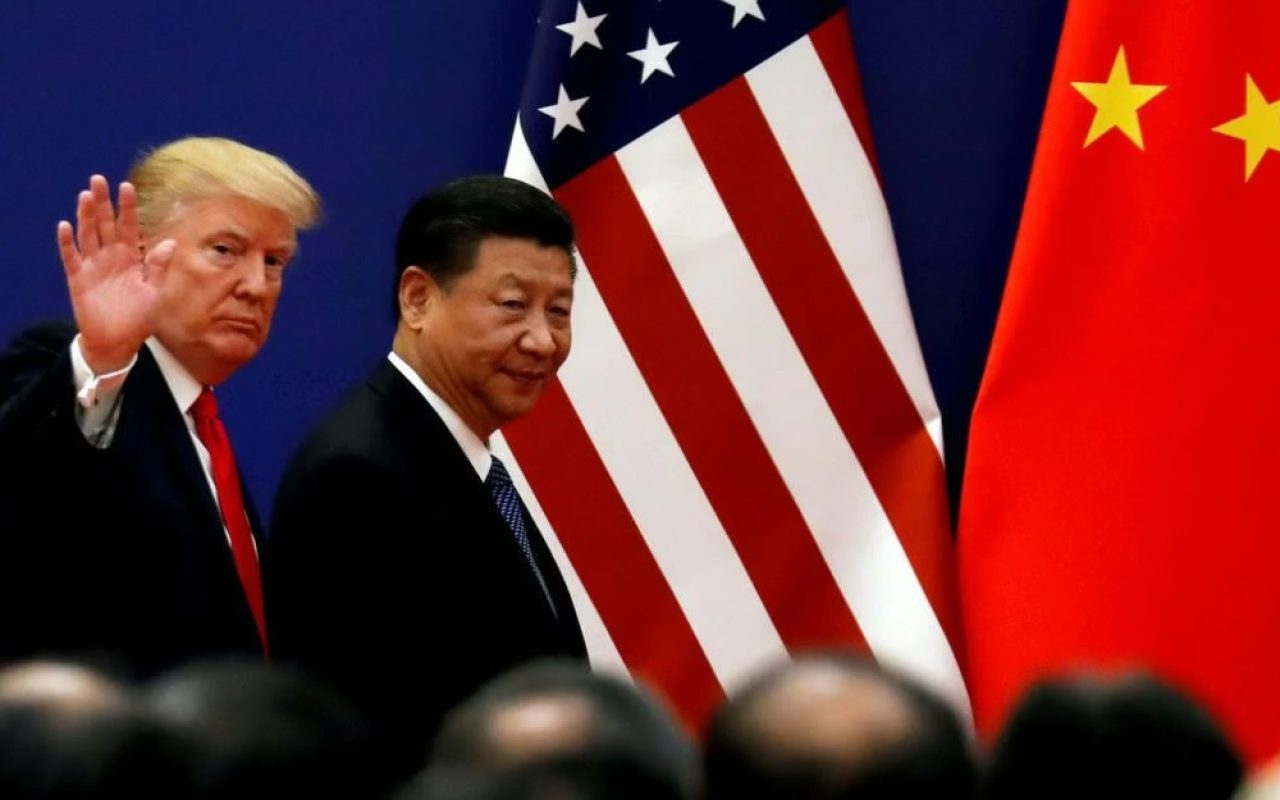
At roughly the same time, UK Prime Minister Keir Starmer completed a multi-day visit to China in a bid to strengthen economic cooperation. This trip, the first by a UK prime minister to Beijing since 2018, resulted in China agreeing to allow visa-free travel for British citizens for stays up to 30 days, aimed at facilitating tourism and business engagement. Officials also announced intentions to pursue a feasibility study for a bilateral services agreement, which would set clearer rules for UK companies operating in China, particularly in sectors like finance, healthcare, education, and professional services.

Outside of the Western Hemisphere and East Asia, Thailand, Southeast Asia’s second-largest economy, is facing headwinds from global trade pressures. According to recent forecasts reflecting government and economic think tank data, Thailand’s economic growth is expected to remain modest in 2026, supported by strong tourism and domestic demand but challenged by slower export momentum. Exports are predicted to be flat or only marginally higher, weighed down by global trade volatility, high household debt, and a strong baht, while foreign arrivals are projected to be around 35.5 million, bolstering the services sector.

The rise of reciprocal trade frameworks and direct bilateral engagement reflects a broader rebalancing of the global commercial order. Whether it’s Washington’s push for reciprocal market access in the Americas or London’s pragmatic engagement with Beijing’s expansive economy, the emphasis is on securing clear rules and tangible advantages for national exporters and investors. For businesses, this evolving environment presents both opportunities and uncertainties, requiring agile responses as shifting tariffs or new visa rules can impact operations and competitiveness with little notice.

References
USTR. (2026, January 29). Ambassador Greer Signs the U.S.–El Salvador Agreement on Reciprocal Trade. https://ustr.gov/about/policy-offices/press-office/press-releases/2026/january/ambassador-greer-signs-us-el-salvador-agreement-reciprocal-trade

USA Rice Federation. (2026, January 29). USTR’s Reciprocal Trade Agreement with El Salvador Addresses Longstanding Fraudulent Rice Issue. https://www.usarice.com/news-and-events/publications/usa-rice-daily/article/2026/01/29/ustr-s-reciprocal-trade-agreement-with-el-salvador-addresses-longstanding-fraudulent-rice-issue

Reuters. (2026, January 29). El Salvador signs trade agreement with US. https://www.reuters.com/world/americas/el-salvador-signs-reciprocal-trade-agreement-with-us-2026-01-29/

Reuters. (2026, January 29). China agrees some visa-free travel for British citizens, UK says. https://www.reuters.com/world/uk/china-agrees-some-visa-free-travel-british-citizens-says-uk-pm-2026-01-29/
Reuters. (2026, January 28). UK’s Starmer arrives in China, encourages firms to seize opportunities. https://www.reuters.com/world/uk/britains-starmer-heads-china-western-alliances-face-strain-2026-01-28/

Reuters. (2026, January 27). Thai finance ministry maintains 2026 growth forecast at 2.0% despite weaker exports. https://www.reuters.com/world/asia-pacific/thai-finance-ministry-maintains-2026-growth-forecast-20-2026-01-27/

Business Today / Malaysian news (2026, January 27). Thailand Keeps 2.0% Growth Forecast As Export Outlook Improves. https://www.businesstoday.com.my/2026/01/27/thailand-keeps-2-0-growth-forecast-as-export-outlook-improves/
Other News and Insights

February 2026 recruitment data from Wave shows a strong early-quarter uptick in activity, with job postings up about 39 % compared with late 2025, alongside increased applications and placements — a sign of renewed hiring momentum in several markets.

Despite this overall surge, imbalances persist across industries. Consistent with broader labour-market reports, health-care hiring continues to be a standout driver of job growth, reflecting chronic staffing shortages and rising demand, while other sectors are expanding more slowly.

Recruiters at firms such as Van Der Consulting face evolving challenges around verifying candidate skills for highly technical and fast-changing roles, particularly in AI and emerging tech areas. According to LinkedIn’s January 2026 Labor Market Report, the global job market remains sluggish in some regions with job seekers outnumbering openings and employers placing greater emphasis on skill-based hiring — especially where advanced technical skills intersect with human-centric strengths like communication and problem-solving.

Industry research also supports the idea that workers with AI-related skills continue to command a substantial wage premium. The PwC 2025 Global AI Jobs Barometer found that jobs requiring AI capabilities are associated with an average wage premium of around 56 % compared with similar roles without those skills, and that demand for AI-proficient talent continues to outpace other job growth.

Overall, the labour market in early 2026 is marked by imbalances between sectors, ongoing shortages of specialised talent, and growing returns for workers who combine technical AI skills with strong interpersonal and problem-solving abilities

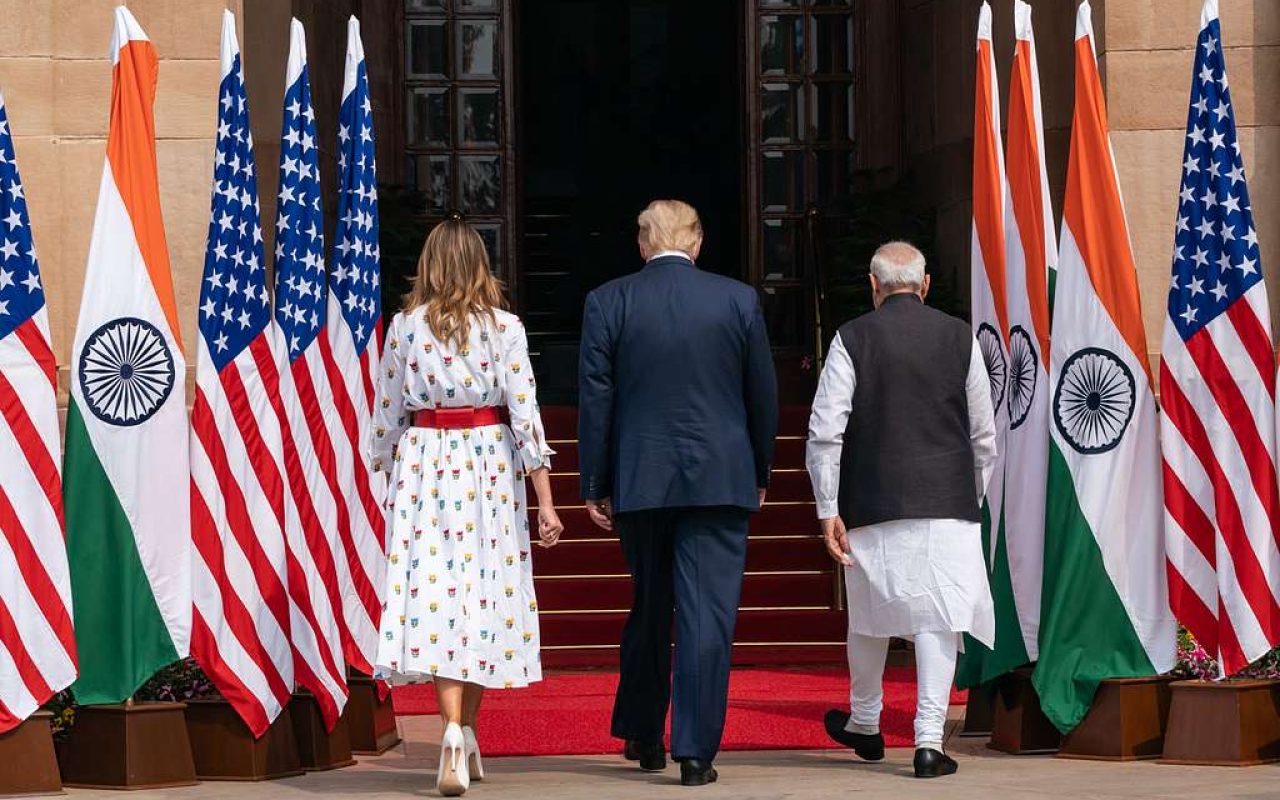
WASHINGTON D.C. / NEW DELHI — The United States and India have announced an interim agreement to ease trade tensions and expand economic cooperation, sparking strong market reactions and strategic debate. Following a call between U.S. President Donald Trump and Indian Prime Minister Narendra Modi on February 2, 2026, both governments confirmed progress toward lowering trade barriers after months of tariff friction.

The central feature of the announcement is a reduction in U.S. tariffs on Indian imports. Washington said it will cut “reciprocal” tariffs on most Indian goods to around 18%, down from an effective levy near 50% imposed during 2025 in response to disputes including India’s energy ties. India has also agreed to cut some of its tariffs and non-tariff barriers on U.S. products, although the full implementing text has not yet been publicly released.

Indian officials have welcomed the tariff rollback as a positive step, noting that reduced duties will help restore export competitiveness in key sectors such as textiles, gems and jewellery and engineering goods that were disrupted by last year’s steep U.S. levies.

As part of the broader deal narrative, the U.S. government highlighted a commitment by India to significantly increase purchases of American products, including energy, technology and agricultural goods, with a total figure often cited around $500 billion over several years. Analysts stress this figure is an aspirational target rather than a legally binding order book, reflecting broader economic cooperation ambitions.

The White House characterized the pact as aligning India more closely with U.S. geopolitical priorities by encouraging a shift away from Russian oil purchases. India’s official statements have been more cautious on this issue, and Moscow has said it has received no formal notification of policy changes. Independent analysts note India’s energy needs are diversified and such a transition would be gradual and conditional on domestic considerations.

Indian stock markets reacted positively, with major indices rising in response to the news. U.S. analysts and policy experts describe the announcement as a confidence-building measure that could unlock longer-term cooperation but caution that details, compliance mechanisms and sensitive sectors, especially agriculture and dairy, remain subject to ongoing negotiation.

While described by officials as a “breakthrough,” observers stress the deal is still in progress rather than fully ratified. Many elements, like the schedule of tariff cuts, regulatory cooperation, and enforcement, have yet to be detailed in a finalized agreement. The current announcement is best understood as an interim framework signaling intent to deepen trade ties as part of a broader economic and strategic alignment.

References

Al Jazeera. (2026, February 3). Modi, Trump announce India-US ‘trade deal’: What we know and what we don’t. https://www.aljazeera.com/news/2026/2/3/modi-trump-announce-india-us-trade-deal-what-we-know-and-what-we-dont

Council on Foreign Relations. (2026, February 3). U.S.-India trade truce announced. https://www.cfr.org/articles/u-s-india-trade-truce-announced

Hindustan Times. (2026, February 3). Trump announces India-US trade deal; tariffs reduced from 50% to 18%. https://www.hindustantimes.com/india-news/india-us-talks-donald-trump-phone-call-narendra-modi-sergio-gor-101770047934666.html

The Hindu. (2026, February 3). India-U.S. trade deal LIVE: Industry welcomes deal, sees tariff cuts boosting growth and competitiveness. https://www.thehindu.com/business/Economy/india-us-trade-deal-the-hindu-live-updates-reactions-details-tariffs-trump-modi-february-3-2026/article70585870.ece

Times of India. (2026, February 3). India-US trade deal: Some key questions that still remain unanswered. https://timesofindia.indiatimes.com/business/india-business/india-us-trade-deal-some-key-questions-that-still-remain-unanswered/articleshow/127888954.cms

January 27, 2026 

The market is on edge as the Federal Reserve’s January policy meeting gets underway today. After a strong Monday session where major U.S. equity indices, including the S&P 500 and Dow, finished higher, sentiment remains mixed ahead of key economic data and policy signals. Spot gold has climbed to record highs above $5,100 per ounce on strong safe-haven demand and dollar weakness, reflecting persistent geopolitical and macroeconomic uncertainties rather than just Federal Reserve expectations.

Attention today is firmly on the Fed’s decision, with markets widely expecting the federal funds rate to be held steady at current levels. Commentary from analysts suggests markets will be watching the Fed’s outlook on inflation and growth closely, especially during Chair Jerome Powell’s press engagement following the announcement. Markets are pricing in that the central bank will remain cautious rather than aggressively shift policy in either direction this week.

U.S. Treasury yields and the dollar have shown volatility as traders balance expectations for monetary policy with broader global risks. While yields have not moved uniformly, bond markets continue to signal caution ahead of the Fed statement and upcoming Treasury auctions.

Credit markets are displaying resilience, and corporate bond spreads have tightened in recent sessions, suggesting fixed-income investors are not yet pricing in a severe downturn. Some banking stocks have seen share weakness due to concerns about interest income and credit quality, but this is part of broader sector rotation rather than a systemic credit crisis. 

In the tech sector, themes of artificial intelligence investment continue to support valuations, with infrastructure and cloud-related plays drawing fresh capital even as cyclical sectors face headwinds. Despite macro uncertainty, many analysts point to strong earnings expectations as a key driver behind equity strength this earnings season. 

For consumers and markets alike, the January Conference Board Consumer Confidence index will be a focus today. Expectations are that the report will provide insight into household sentiment amid a resilient job market and moderating, though persistent, inflation pressures. This figure will help assess whether consumer spending remains a stabilizing force for U.S. economic growth.

Markets remain fundamentally uncertain and reactive rather than directional. The coexistence of record gold prices alongside solid equity performance suggests investors are balancing risk assets with defensive positions. Over the next 48 hours, the main risks revolve around communication clarity from policymakers, incoming economic data, and how markets interpret the Fed’s stance on inflation and growth.


References

Forex.com. (2026, January 26). S&P 500 Forecast: SPX rises ahead of Mag 7 earnings & FOMC decision this week. https://www.forex.com/en-ca/news-and-analysis/s-p-500-forecast-spx-rises-ahead-of-mag-7-earnings-fomc-decision-this-week/

Invesco. (2026, January 26). Four key market signals to watch. https://www.invesco.com/us/en/insights/market-signals-investors-watch.html

Investing.com. (2026, January 26). Trump speech and consumer confidence highlight Tuesday’s economic calendar. https://www.investing.com/news/stock-market-news/trump-speech-and-consumer-confidence-highlight-tuesdays-economic-calendar-93CH-4465810

Kiplinger. (2026, January 26). January Fed Meeting: Live Updates and Commentary. https://www.kiplinger.com/investing/live/january-fed-meeting-live-updates-and-commentary

Manila Times. (2026, January 27). US stocks rise as gold hits another record and the dollar’s value sinks again. https://www.manilatimes.net/2026/01/27/business/foreign-business/us-stocks-rise-as-gold-hits-another-record-and-the-dollars-value-sinks-again/2265644

Morningstar. (2026, January 14). Financials Down After BofA, Wells, Citi Earnings — Financials Roundup. https://www.morningstar.com/news/dow-jones/202601148751/financials-down-after-bofa-wells-citi-earnings-financials-roundup

The Jakarta Post. (2026, January 27). Stocks up as earnings hopes offset Trump’s Korea tariff move, dollar wobbles. http://www.thejakartapost.com/business/2026/01/27/stocks-up-as-earnings-hopes-offset-trumps-korea-tariff-move-dollar-wobbles.html

November 21, 2025

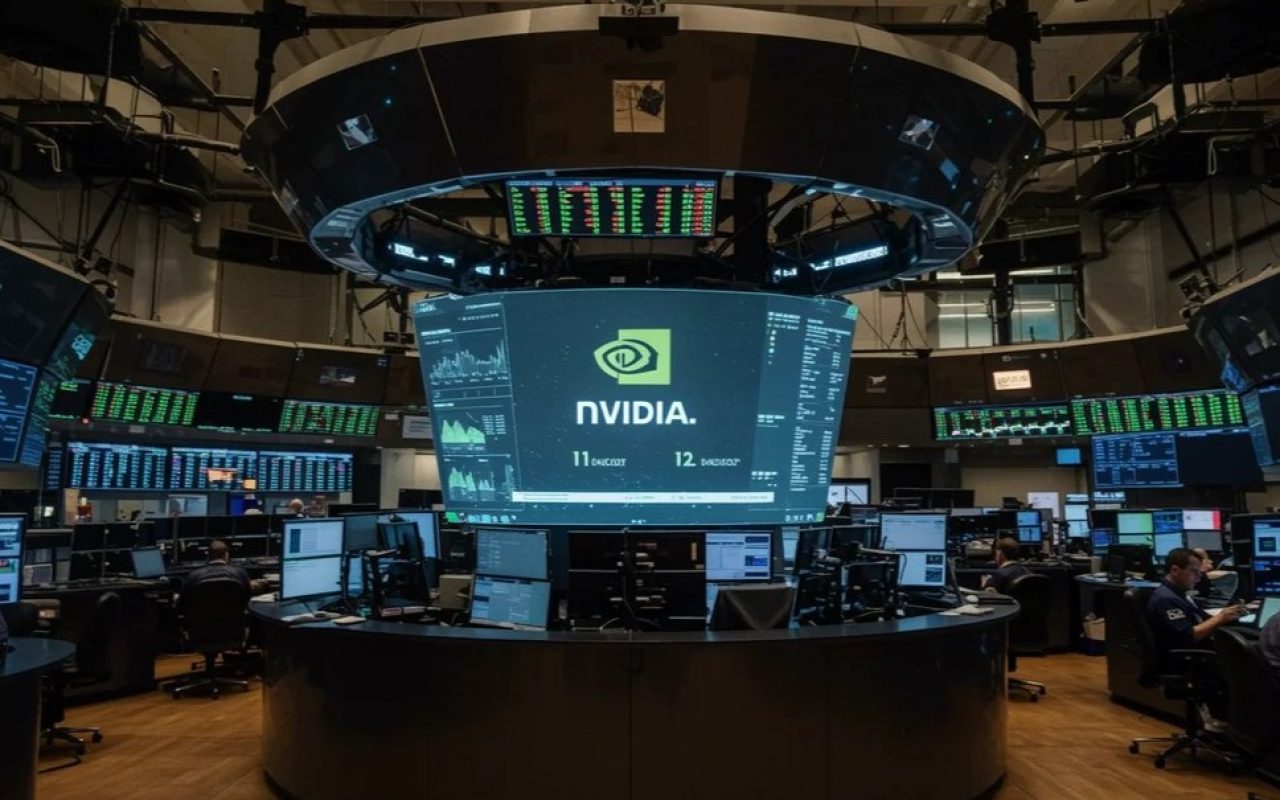
For the past two years, the global equity narrative has been single-threaded: Artificial Intelligence as the engine, and Nvidia as the fuel. But as markets opened this Friday morning following a volatile Thursday session, that narrative is facing its most severe stress test to date. Despite Nvidia delivering yet another blockbuster quarterly report, posting revenue of $57.0 billion and blowing past forecasts, Wall Street’s reaction was not a victory lap, but a shudder. 

The tech-heavy Nasdaq Composite fell 2.2% on Thursday, erasing early gains, while the S&P 500 dropped 1.6%. The reversal signals a critical psychological shift in global capital markets where the burden of proof has moved from “capacity” to “profitability.” Investors are no longer satisfied with hyperscaler capex spending alone, they are demanding clearer evidence that the trillions poured into AI infrastructure are generating commensurate returns across the broader economy. A recent fund-manager survey by Bank of America suggests a record proportion of investors now believe companies are “overinvesting” in AI, raising fears of a cap-ex bubble reminiscent of the late-1990s fibre-optics oversupply.

This tech-sector anxiety is compounded by a murky macroeconomic backdrop in the United States. The recent 43-day federal government shutdown has left the Federal Reserve “flying blind”, creating a “data fog” just when the central bank is poised to make a pivotal interest-rate decision in December. The delayed September jobs report, finally released, painted a confusing picture: while the economy added a robust 119,000 jobs, the unemployment rate unexpectedly rose to 4.4%. 

 These mixed signals, combined with sticky inflation data, have dimmed hopes for an aggressive rate cut, sending the 10-year Treasury yield hovering near 4.14%.

While the “AI trade” falters, capital is rotating into defensive moats. Walmart surged 6.5% after raising its fiscal 2026 outlook, highlighting a stark divergence in the consumer economy where high-income households are retrenching while middle- and lower-income consumers are “trading down” in search of value. This bifurcation is a classic late-cycle signal, suggesting that the “soft landing” promised by policymakers may be bumpier than anticipated.

On the geopolitical front, renewed talk of tariffs under the Donald Trump administration is adding another layer of friction. Coupled with domestic headlines like the “Epstein Files Transparency Act”, the policy environment remains as volatile as the markets. Meanwhile, the crypto sector, often a proxy for risk appetite, has capitulated: Bitcoin has slid below $87,000, marking an approximate 30% draw-down from its October highs.

Bottom Line: The era of blind faith in AI growth is over. We are entering a phase of scrutiny where earnings quality and macroeconomic resilience will outweigh thematic hype. For corporate leaders and investors alike, the message from this week’s volatility is clear: protect margins, watch the consumer, and prepare for a winter of discontent in valuations of high-flying tech.


References

Associated Press. (2025, November 20). Big swings keep rocking Wall Street as US stocks drop sharply after erasing a morning surge. https://apnews.com/article/asia-nvidia-earnings-us-stocks-71372f3476dd13c33d316819bf902b17

Investopedia. (2025, November 20). Markets News, Nov. 20, 2025: Major Stock Indexes Post Massive Losses as Early Nvidia-Led Rally Fades. https://www.investopedia.com/dow-jones-today-11202025-11853411

The Guardian. (2025, November 20). US added 119,000 jobs in September in report delayed by federal shutdown. https://www.theguardian.com/business/economics

Al Jazeera. (2025, November 20). Nvidia forecasts Q4 revenue above estimates despite AI bubble concerns. https://www.aljazeera.com/economy/

The Atlantic Council. (2025, November 20). Trump and MBS have big ambitions for the Middle East. https://www.atlanticcouncil.org/content-series/inflection-points/trump-and-mbs-have-big-ambitions-for-the-middle-east-bold-action-must-follow/


December 9, 2025

The global economic narrative today is shaped by renewed momentum in United States–India trade talks, set against new data confirming the structural resilience of China’s export machine, even as U.S. tariffs continue to weigh on Sino-U.S. trade. 

A delegation from the United States, led by Deputy U.S. Trade Representative Rick Switzer, is scheduled to meet counterparts in New Delhi from December 10–11, 2025, to begin discussions on the first phase of a proposed bilateral trade agreement. While some Indian officials have signalled optimism about finalising an initial deal by year-end, sources stress that this round may serve more as a preliminary or exploratory session rather than a formal negotiation. The broader ambition remains to reach the goals outlined under Mission 500, boosting bilateral trade to US $500 billion by 2030. 

China’s Trade Surplus Hits Record: Meanwhile, China’s goods trade surplus has exceeded US $1 trillion for the first time ever (first 11 months of 2025), according to customs data, marking a substantial increase from 2024’s total of about US $992 billion. 

In November, Chinese exports rebounded 5.9% year-on-year while imports rose only 1.9%, yielding a single-month surplus of roughly US $112 billion. Though exports to the United States fell sharply, nearly 29% in November, China seems to have offset much of the loss by diversifying export markets toward regions such as Southeast Asia, Europe, Australia, and beyond. This outcome underscores the limits of tariffs alone in curbing China’s global export reach.

The US–India negotiations come at a critical juncture. Facing rising competition in global supply chains, India may view a trade deal with the U.S. as a way to solidify its role as an alternative manufacturing and export hub, especially amid China’s continued dominance in exports. Yet, whether this “first tranche” will materialize as a binding agreement by year-end, or remain preliminary, is still uncertain. On the China side, although the trade-surplus milestone is impressive, analysts caution that long-term vulnerabilities remain, including weak domestic demand, overreliance on external markets, and rising geopolitical scrutiny from other trading partners.

References

December 31, 2025

As the closing bell rings on the final trading session of 2025, Wall Street finds itself suspended between celebration and unease. U.S. equity markets have delivered another banner year, defying persistent warnings of recession, tighter credit, and geopolitical instability. Yet beneath the surface of record-setting index levels lies a growing sense that the rally has become increasingly fragile, sustained less by broad economic strength than by liquidity, concentration, and investor inertia.

The S&P 500 closed the year near an all-time high of approximately 6,896, marking an annual gain of roughly 17%, according to market data. The achievement caps a year in which large-cap technology and AI-linked firms once again dominated returns, masking weakness elsewhere in the economy. Few strategists predicted such resilience at the start of the year, particularly amid lingering inflation concerns and slowing global growth.

But as traders exit for the holidays, the prevailing mood is not exuberance. It is a relief.

From “Goldilocks” to a K-Shaped Reality

For much of 2025, markets embraced a “Goldilocks” narrative: inflation cooling just enough to allow the Federal Reserve to ease policy, while economic growth remained intact. Over time, however, that narrative has frayed. What has emerged instead is something closer to a K-shaped economy, where asset prices and high-income consumption continue to surge while labor market momentum softens and lower-income households face mounting pressure.

This divergence has become increasingly difficult to ignore. Equity valuations reflect optimism bordering on perfection, yet measures of labor participation, job creation, and real wage growth have failed to keep pace with headline GDP figures. The result is an economy that looks strong on paper but uneven in lived experience.

Markets Send Mixed Signals

The final trading days of the year captured this tension. Major U.S. indices finished flat to slightly lower, as investors adopted a “wait-and-see” stance ahead of the new year and forthcoming guidance from the Federal Reserve. At the same time, gold continued its historic ascent, trading around $4,364 per ounce, reinforcing its role as a hedge against policy uncertainty and currency debasement.

The simultaneous strength of both speculative assets and traditional safe havens is an unusual and telling combination. When investors bid up growth stocks while also stockpiling gold, it often signals not confidence in productivity gains, but anxiety over the durability of monetary stability. In effect, markets appear to be pricing both optimism and fear at once.

Growth Without Jobs?

Beneath the index-level euphoria, cracks are forming in the real economy. Recent data show that U.S. GDP expanded at a robust 4.3% annualized pace in the third quarter, supported by high-income consumer spending and sustained investment in artificial intelligence and automation. Yet labor market gains have slowed markedly compared to earlier stages of the expansion.

Economists increasingly warn of a form of “job-light” growth, in which productivity gains and capital investment outpace hiring. This dynamic has complicated policymaking, particularly for the Federal Reserve, which must balance progress on inflation against signs of cooling employment conditions. Public commentary from Fed officials throughout the year has reflected this tension, leaving markets uncertain about the path of rates in early 2026.

A Fracturing Global Backdrop

The global context offers little reassurance. As 2025 draws to a close, multinational corporations are confronting a trade environment defined less by efficiency and more by resilience. Supply chains are being shortened, duplicated, or rerouted, not to maximize margins, but to minimize geopolitical risk.

China’s expanding industrial capacity and increasingly assertive trade posture have further complicated Western efforts to “de-risk” without triggering outright decoupling. Meanwhile, renewed trade tensions, industrial subsidies, and strategic tariffs have reinforced a reality many executives are only beginning to accept: the era of frictionless globalization is over.

This shift carries inflationary consequences. Building redundancy into global supply chains may enhance stability, but it also raises costs, costs that ultimately filter through to consumers and corporate margins alike.

Looking Ahead to 2026

As champagne glasses are raised across trading floors and corner offices, the outlook for 2026 remains deeply uncertain. Equity valuations suggest confidence in a benign outcome, yet the underlying risks, from policy missteps and labor market weakness to geopolitical escalation, have not disappeared. They have merely been deferred.

The much-anticipated “January Effect,” traditionally associated with fresh inflows of capital and renewed optimism, may take on a different character this year. Rather than a surge of buying, markets could face a sober reassessment as bond investors, returning from the holidays, demand greater compensation for risk in a world of elevated debt and persistent uncertainty.

2025 delivered impressive gains, but at a growing cost. As the calendar turns, investors may discover that the celebration itself was the velvet trap, and that the bill is coming due.


References

Date: December 23, 2025

Wall Street has officially entered the “twilight zone” of the 2025 trading year. As liquidity thins ahead of the Christmas holiday, the S&P 500 and Nasdaq are pushing higher into Tuesday’s session, defying the typical late-December slowdown. But the calm on equity screens contrasts sharply with the urgency building in commodities. Gold futures have vaulted past a major psychological threshold, trading above $4,400 an ounce for the first time, while silver prices are approaching the $70 level.

This unusual alignment, strength in both risk assets (stocks) and traditional risk hedges (gold), suggests investors are simultaneously embracing the Federal Reserve’s recent rate cut to 3.75% and guarding against its longer-term consequences. With the 10-year Treasury yield holding near 4.17%, the speed and scale of the precious metals rally points to growing concern that easier financial conditions could revive inflation pressures as early as Q1 2026.

Geopolitics is adding another layer of uncertainty. Earlier optimism around a temporary “trade truce” is beginning to fade, though the fault lines are shifting. While U.S.–China negotiations remain in a holding pattern, Beijing has escalated trade pressure on Europe. China’s Ministry of Commerce announced that anti-dumping tariffs of between 21.9% and 42.7% on EU dairy imports have taken effect, directly impacting producers in the Netherlands and Denmark, including FrieslandCampina and Arla. The move underscores China’s willingness to use targeted trade measures amid broader strategic tensions.

In contrast, sentiment in the technology sector remains resilient. Reports indicate Nvidia (NVDA) is preparing a compliant version of its H200 AI chip that could allow shipments to China to resume by mid-February. Even with performance restrictions, the prospect of renewed access to Chinese demand has lifted semiconductor stocks, helping offset concerns tied to widening global trade frictions.

Meanwhile, consolidation pressures are intensifying in the media industry as competition shifts from subscriber growth to scale. Paramount Global (PARA) is reported to have made a roughly $40 billion hostile bid for Warner Bros. Discovery (WBD), potentially complicating separate takeover speculation involving Netflix. The aggressive move reflects urgency among legacy media firms ahead of a tougher regulatory environment expected in 2026, which could narrow the window for large-scale mergers.

The “Santa Rally” appears intact, but it is unfolding alongside a sharp reassessment of monetary risk. When gold rises more than 1% in a single session without a clear crisis trigger, it signals heightened sensitivity to central bank policy and currency stability. Equity gains may continue into year-end, but investors should watch the dollar index (DXY) closely. A decisive break lower could indicate that the inflation-sensitive trades of 2026 are already coming into focus.

References

Our latest predictions on major currency pairs and practical steps businesses can take to mitigate exchange rate risk exposure.