
The “Santa Pause”: AI Repricing and Policy Uncertainty Temper Year-End Optimism

December 18, 2025

As the final trading days of 2025 approach, the traditionally anticipated “Santa Claus Rally” has lost momentum amid growing investor caution. While the S&P 500 remains near record levels, the strong upward impulse seen in November has moderated. A combination of a volatile labor market report, mixed signals from the Federal Reserve, and a rotation away from high-valuation growth stocks has made investors more reluctant to increase exposure heading into the holiday period.

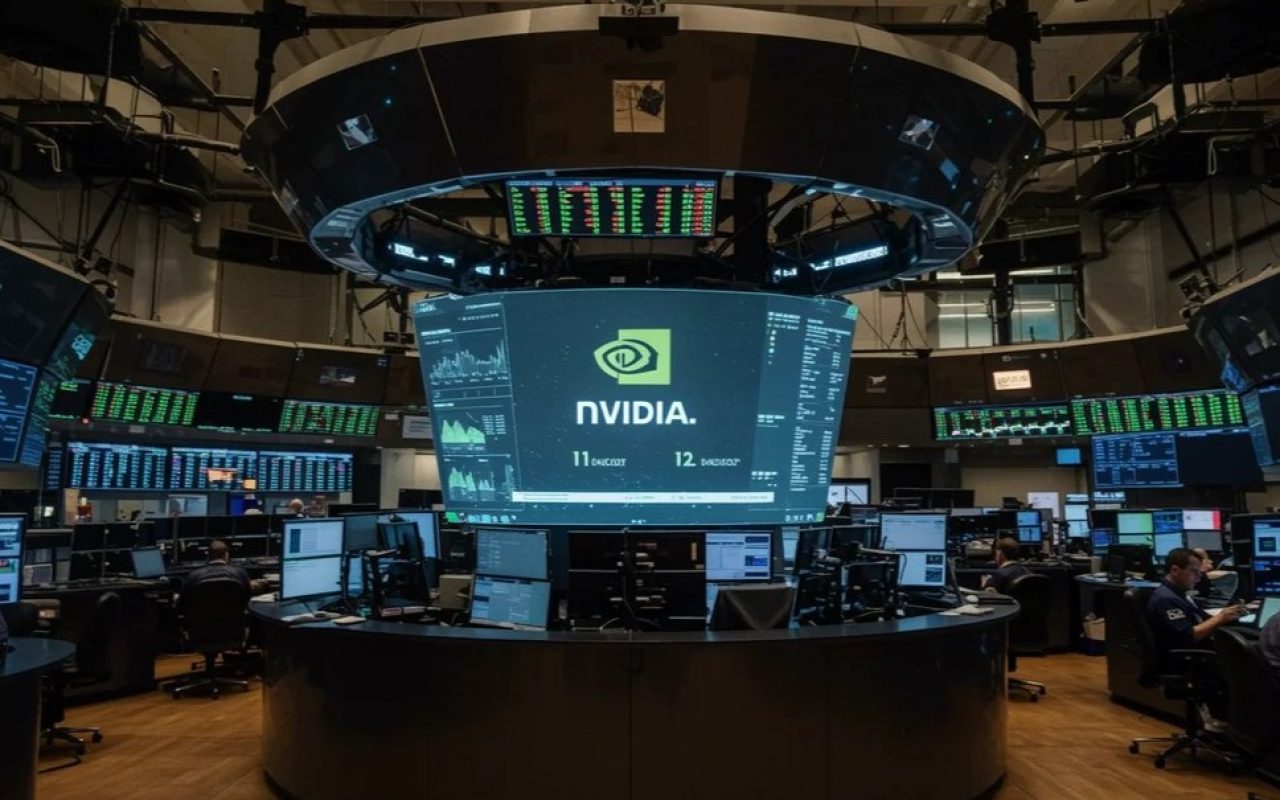
A central theme this week has been a reassessment of the so-called “AI trade.” Several major semiconductor and enterprise software stocks experienced renewed selling pressure on Wednesday, contributing to a 1.8% decline in the Nasdaq, its weakest session in several weeks. Investor sentiment appears to be shifting as market participants scrutinize whether current capital expenditure commitments can translate into near-term revenue growth. Oracle shares fell more than 5% following reports that financing for a large-scale AI data center project had been delayed, highlighting the increasing focus on funding discipline and return on investment. This shift in sentiment weighed on the broader sector, including Nvidia and Broadcom, reinforcing the view that future valuations will depend more heavily on realized cash flows rather than projected capacity expansion.

On the macroeconomic side, the Federal Reserve’s transition toward a more accommodative stance has been less straightforward than markets initially anticipated. The Fed implemented a 25-basis-point rate cut last week, lowering the target range to 3.50%–3.75%, but the response across asset classes has been muted. Long-term interest rates, in particular, have remained elevated, with the 10-year Treasury yield holding above 4.15%. This divergence suggests that bond investors remain cautious about inflation persistence and fiscal risks, even as the Fed seeks to support economic activity amid a labor market showing signs of gradual softening, with unemployment edging up to 4.4%.

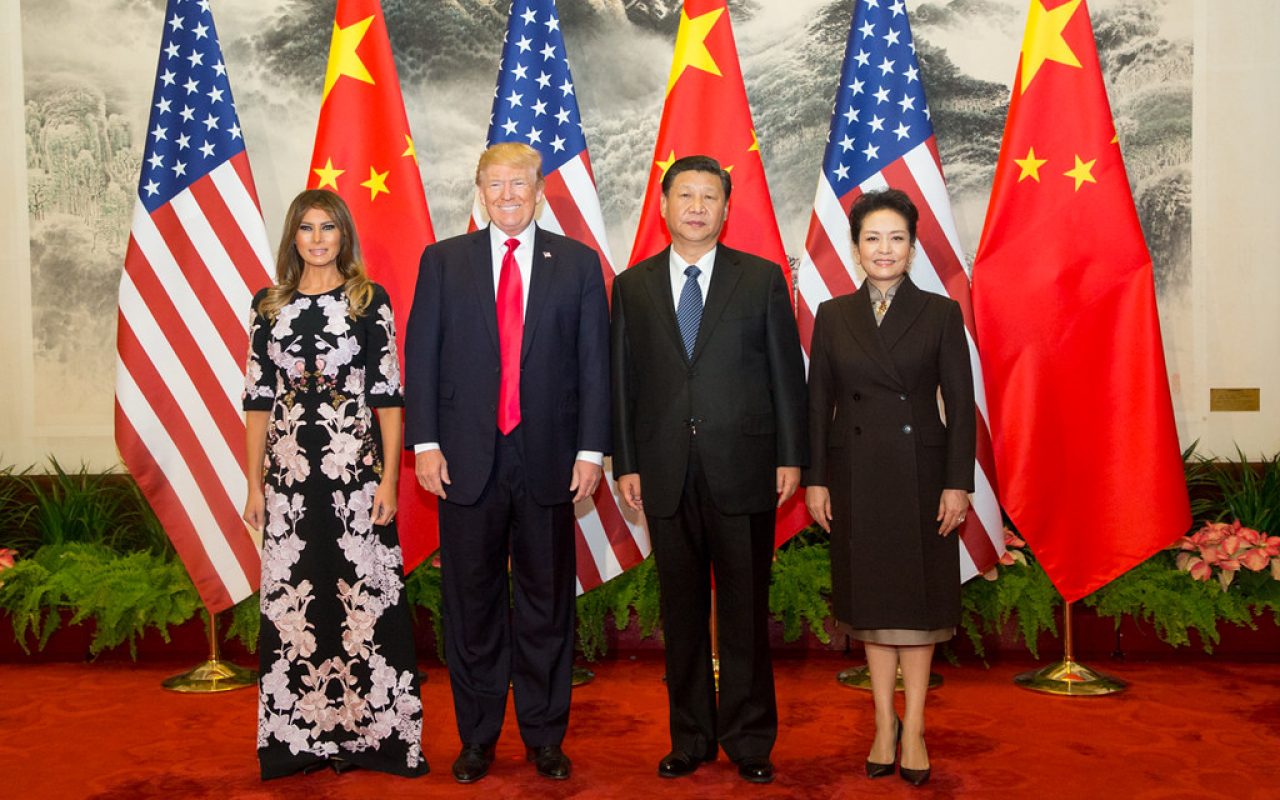
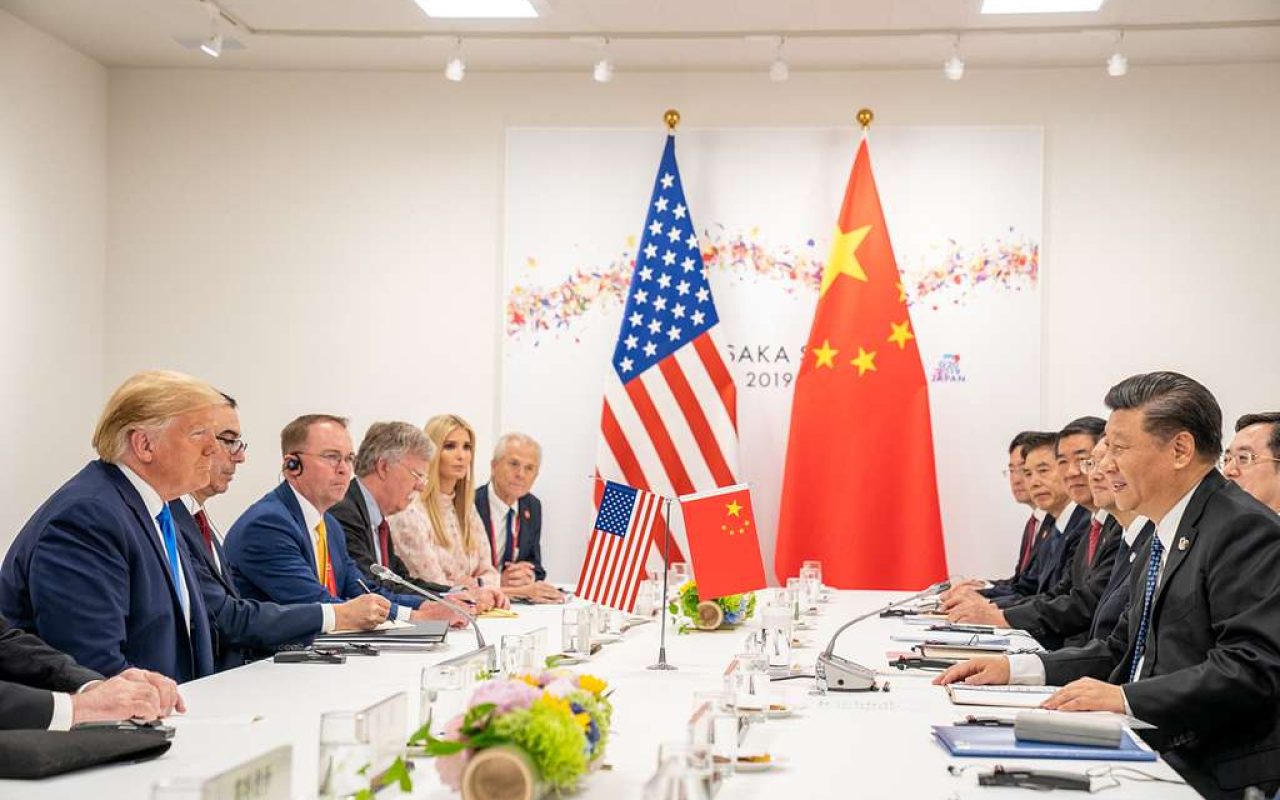
Geopolitical considerations are also contributing to the cautious tone. While the “Kuala Lumpur Truce” reduced the immediate risk of renewed tariff escalation between the U.S. and China, broader strategic tensions persist. Recent reporting has drawn attention to China’s expanding role in maritime security operations in parts of Africa and the Indian Ocean, developments that could have longer-term implications for trade routes and regional stability. At the same time, China’s economy appears to have exceeded earlier 2025 growth expectations, with nominal GDP approaching an estimated $19.8 trillion, supported by strong exports in high-tech manufacturing sectors such as electric vehicles, robotics, and renewable energy technologies.


Markets appear to be undergoing a period of cautious reallocation rather than outright risk aversion. Investor capital is rotating away from the most speculative segments of the AI complex and toward assets more closely tied to current economic activity, including energy, where oil prices rose modestly after the U.S. administration moved to restrict Venezuelan tanker operations. With key inflation data due shortly, volatility is likely to remain elevated through year-end. Much of the easy gains of 2025 may already be realized, suggesting that market performance in 2026 will depend more on earnings resilience and margin discipline than on multiple expansion alone.

References

Other News and Insights

November 21, 2025

For the past two years, the global equity narrative has been single-threaded: Artificial Intelligence as the engine, and Nvidia as the fuel. But as markets opened this Friday morning following a volatile Thursday session, that narrative is facing its most severe stress test to date. Despite Nvidia delivering yet another blockbuster quarterly report, posting revenue of $57.0 billion and blowing past forecasts, Wall Street’s reaction was not a victory lap, but a shudder. 

The tech-heavy Nasdaq Composite fell 2.2% on Thursday, erasing early gains, while the S&P 500 dropped 1.6%. The reversal signals a critical psychological shift in global capital markets where the burden of proof has moved from “capacity” to “profitability.” Investors are no longer satisfied with hyperscaler capex spending alone, they are demanding clearer evidence that the trillions poured into AI infrastructure are generating commensurate returns across the broader economy. A recent fund-manager survey by Bank of America suggests a record proportion of investors now believe companies are “overinvesting” in AI, raising fears of a cap-ex bubble reminiscent of the late-1990s fibre-optics oversupply.

This tech-sector anxiety is compounded by a murky macroeconomic backdrop in the United States. The recent 43-day federal government shutdown has left the Federal Reserve “flying blind”, creating a “data fog” just when the central bank is poised to make a pivotal interest-rate decision in December. The delayed September jobs report, finally released, painted a confusing picture: while the economy added a robust 119,000 jobs, the unemployment rate unexpectedly rose to 4.4%. 

 These mixed signals, combined with sticky inflation data, have dimmed hopes for an aggressive rate cut, sending the 10-year Treasury yield hovering near 4.14%.

While the “AI trade” falters, capital is rotating into defensive moats. Walmart surged 6.5% after raising its fiscal 2026 outlook, highlighting a stark divergence in the consumer economy where high-income households are retrenching while middle- and lower-income consumers are “trading down” in search of value. This bifurcation is a classic late-cycle signal, suggesting that the “soft landing” promised by policymakers may be bumpier than anticipated.

On the geopolitical front, renewed talk of tariffs under the Donald Trump administration is adding another layer of friction. Coupled with domestic headlines like the “Epstein Files Transparency Act”, the policy environment remains as volatile as the markets. Meanwhile, the crypto sector, often a proxy for risk appetite, has capitulated: Bitcoin has slid below $87,000, marking an approximate 30% draw-down from its October highs.

Bottom Line: The era of blind faith in AI growth is over. We are entering a phase of scrutiny where earnings quality and macroeconomic resilience will outweigh thematic hype. For corporate leaders and investors alike, the message from this week’s volatility is clear: protect margins, watch the consumer, and prepare for a winter of discontent in valuations of high-flying tech.


References

Associated Press. (2025, November 20). Big swings keep rocking Wall Street as US stocks drop sharply after erasing a morning surge. https://apnews.com/article/asia-nvidia-earnings-us-stocks-71372f3476dd13c33d316819bf902b17

Investopedia. (2025, November 20). Markets News, Nov. 20, 2025: Major Stock Indexes Post Massive Losses as Early Nvidia-Led Rally Fades. https://www.investopedia.com/dow-jones-today-11202025-11853411

The Guardian. (2025, November 20). US added 119,000 jobs in September in report delayed by federal shutdown. https://www.theguardian.com/business/economics

Al Jazeera. (2025, November 20). Nvidia forecasts Q4 revenue above estimates despite AI bubble concerns. https://www.aljazeera.com/economy/

The Atlantic Council. (2025, November 20). Trump and MBS have big ambitions for the Middle East. https://www.atlanticcouncil.org/content-series/inflection-points/trump-and-mbs-have-big-ambitions-for-the-middle-east-bold-action-must-follow/


Our latest predictions on major currency pairs and practical steps businesses can take to mitigate exchange rate risk exposure.

December 31, 2025

As the closing bell rings on the final trading session of 2025, Wall Street finds itself suspended between celebration and unease. U.S. equity markets have delivered another banner year, defying persistent warnings of recession, tighter credit, and geopolitical instability. Yet beneath the surface of record-setting index levels lies a growing sense that the rally has become increasingly fragile, sustained less by broad economic strength than by liquidity, concentration, and investor inertia.

The S&P 500 closed the year near an all-time high of approximately 6,896, marking an annual gain of roughly 17%, according to market data. The achievement caps a year in which large-cap technology and AI-linked firms once again dominated returns, masking weakness elsewhere in the economy. Few strategists predicted such resilience at the start of the year, particularly amid lingering inflation concerns and slowing global growth.

But as traders exit for the holidays, the prevailing mood is not exuberance. It is a relief.

From “Goldilocks” to a K-Shaped Reality

For much of 2025, markets embraced a “Goldilocks” narrative: inflation cooling just enough to allow the Federal Reserve to ease policy, while economic growth remained intact. Over time, however, that narrative has frayed. What has emerged instead is something closer to a K-shaped economy, where asset prices and high-income consumption continue to surge while labor market momentum softens and lower-income households face mounting pressure.

This divergence has become increasingly difficult to ignore. Equity valuations reflect optimism bordering on perfection, yet measures of labor participation, job creation, and real wage growth have failed to keep pace with headline GDP figures. The result is an economy that looks strong on paper but uneven in lived experience.

Markets Send Mixed Signals

The final trading days of the year captured this tension. Major U.S. indices finished flat to slightly lower, as investors adopted a “wait-and-see” stance ahead of the new year and forthcoming guidance from the Federal Reserve. At the same time, gold continued its historic ascent, trading around $4,364 per ounce, reinforcing its role as a hedge against policy uncertainty and currency debasement.

The simultaneous strength of both speculative assets and traditional safe havens is an unusual and telling combination. When investors bid up growth stocks while also stockpiling gold, it often signals not confidence in productivity gains, but anxiety over the durability of monetary stability. In effect, markets appear to be pricing both optimism and fear at once.

Growth Without Jobs?

Beneath the index-level euphoria, cracks are forming in the real economy. Recent data show that U.S. GDP expanded at a robust 4.3% annualized pace in the third quarter, supported by high-income consumer spending and sustained investment in artificial intelligence and automation. Yet labor market gains have slowed markedly compared to earlier stages of the expansion.

Economists increasingly warn of a form of “job-light” growth, in which productivity gains and capital investment outpace hiring. This dynamic has complicated policymaking, particularly for the Federal Reserve, which must balance progress on inflation against signs of cooling employment conditions. Public commentary from Fed officials throughout the year has reflected this tension, leaving markets uncertain about the path of rates in early 2026.

A Fracturing Global Backdrop

The global context offers little reassurance. As 2025 draws to a close, multinational corporations are confronting a trade environment defined less by efficiency and more by resilience. Supply chains are being shortened, duplicated, or rerouted, not to maximize margins, but to minimize geopolitical risk.

China’s expanding industrial capacity and increasingly assertive trade posture have further complicated Western efforts to “de-risk” without triggering outright decoupling. Meanwhile, renewed trade tensions, industrial subsidies, and strategic tariffs have reinforced a reality many executives are only beginning to accept: the era of frictionless globalization is over.

This shift carries inflationary consequences. Building redundancy into global supply chains may enhance stability, but it also raises costs, costs that ultimately filter through to consumers and corporate margins alike.

Looking Ahead to 2026

As champagne glasses are raised across trading floors and corner offices, the outlook for 2026 remains deeply uncertain. Equity valuations suggest confidence in a benign outcome, yet the underlying risks, from policy missteps and labor market weakness to geopolitical escalation, have not disappeared. They have merely been deferred.

The much-anticipated “January Effect,” traditionally associated with fresh inflows of capital and renewed optimism, may take on a different character this year. Rather than a surge of buying, markets could face a sober reassessment as bond investors, returning from the holidays, demand greater compensation for risk in a world of elevated debt and persistent uncertainty.

2025 delivered impressive gains, but at a growing cost. As the calendar turns, investors may discover that the celebration itself was the velvet trap, and that the bill is coming due.


References

November 19, 2025

The economic relationship between the United States and the Association of Southeast Asian Nations (ASEAN) is increasingly shaped by the tension between Washington’s push for deeper strategic cooperation and ASEAN’s emphasis on multilateral economic integration. Following the ASEAN Summit, the U.S. move toward more reciprocal trade arrangements has sought to influence regional supply chains by linking preferential market access with broader strategic commitments (Brownstein, 2025). Under this approach, ASEAN members that have formal agreements, such as Malaysia and Cambodia, and those participating through frameworks, such as Vietnam and Thailand, remain within the U.S. reciprocal tariff regime but may receive targeted exemptions. This has created a differentiated tariff landscape influenced by each country’s alignment track record rather than purely economic considerations (Dezan Shira & Associates, 2025).

This tiered structure places ASEAN in a difficult position despite its demonstrated economic resilience. While the United States is ASEAN’s fourth-largest trading partner, the region’s trade with China is more than twice that volume, underscoring Beijing’s central role in regional production networks (Heinrich Böll Foundation, 2025). U.S. tariff measures also aim to curb China’s regional influence by imposing higher duties on goods suspected of being rerouted or transshipped through ASEAN economies, prompting member states to strengthen their customs enforcement to address U.S. concerns over duty circumvention (Bangkok Post, 2025). These compliance requirements, however, clash with ASEAN’s heavy dependence on Chinese inputs and capital, generating both political sensitivity and operational challenges for states trying to maintain strategic neutrality (Bangkok Post, 2025).

At the same time, China is expanding its own regional economic footprint by advancing multilateral initiatives such as the upgraded ASEAN–China Free Trade Area (ACFTA 3.0). The new framework emphasizes cooperation in digital trade, supply chain resilience, and standards harmonization, positioning China as a more stable long-term economic partner and offering ASEAN an institutional buffer against external policy volatility (ThinkChina, 2025). The broader geopolitical signal is clear: while ASEAN leaders still describe Washington as an important strategic counterweight, the more predictable and institution-driven nature of China’s economic engagement may encourage a gradual structural tilt toward Beijing if U.S. trade policy continues to shift toward short-term, transactional arrangements (East Asia Forum, 2025).

References

Bangkok Post. (2025). Southeast Asia squeezed by superpowers. https://www.bangkokpost.com/opinion/opinion/3137651/southeast-asia-squeezed-by-superpowers

Brownstein. (2025). President Trump Reaches Trade Agreements with Southeast Asian Countries. https://www.bhfs.com/insight/president-trump-reaches-trade-agreements-with-southeast-asian-countries/

Dezan Shira & Associates. (2025). U.S. Tariffs in Asia 2025 – A Regional Investment Map. https://www.aseanbriefing.com/news/u-s-tariffs-in-asia-2025-a-regional-investment-map/

East Asia Forum. (2025). Trump tariffs tilt Southeast Asia towards China. https://eastasiaforum.org/2025/09/23/trump-tariffs-tilt-southeast-asia-towards-china/

Heinrich Böll Foundation. (2025). In A Turbulent World, ASEAN Needs to Do Its Internal Homework. https://th.boell.org/en/2025/07/18/turbulent-world-asean-needs-do-its-internal-homework

ThinkChina. (2025). ACFTA 3.0: The China-ASEAN deal that could shake US influence? https://www.thinkchina.sg/economy/acfta-3-0-china-asean-deal-could-shake-us-influence


December 9, 2025

The global economic narrative today is shaped by renewed momentum in United States–India trade talks, set against new data confirming the structural resilience of China’s export machine, even as U.S. tariffs continue to weigh on Sino-U.S. trade. 

A delegation from the United States, led by Deputy U.S. Trade Representative Rick Switzer, is scheduled to meet counterparts in New Delhi from December 10–11, 2025, to begin discussions on the first phase of a proposed bilateral trade agreement. While some Indian officials have signalled optimism about finalising an initial deal by year-end, sources stress that this round may serve more as a preliminary or exploratory session rather than a formal negotiation. The broader ambition remains to reach the goals outlined under Mission 500, boosting bilateral trade to US $500 billion by 2030. 

China’s Trade Surplus Hits Record: Meanwhile, China’s goods trade surplus has exceeded US $1 trillion for the first time ever (first 11 months of 2025), according to customs data, marking a substantial increase from 2024’s total of about US $992 billion. 

In November, Chinese exports rebounded 5.9% year-on-year while imports rose only 1.9%, yielding a single-month surplus of roughly US $112 billion. Though exports to the United States fell sharply, nearly 29% in November, China seems to have offset much of the loss by diversifying export markets toward regions such as Southeast Asia, Europe, Australia, and beyond. This outcome underscores the limits of tariffs alone in curbing China’s global export reach.

The US–India negotiations come at a critical juncture. Facing rising competition in global supply chains, India may view a trade deal with the U.S. as a way to solidify its role as an alternative manufacturing and export hub, especially amid China’s continued dominance in exports. Yet, whether this “first tranche” will materialize as a binding agreement by year-end, or remain preliminary, is still uncertain. On the China side, although the trade-surplus milestone is impressive, analysts caution that long-term vulnerabilities remain, including weak domestic demand, overreliance on external markets, and rising geopolitical scrutiny from other trading partners.

References

A guide to the rapidly evolving landscape of international technology transfer regulations and compliance requirements.

Date: January 3, 2026

If the final trading days of 2025 felt like a champagne toast to the long-awaited “Soft Landing,” the opening sessions of 2026 are beginning to resemble the morning after. As global markets find their footing in the first full trading week of the new year, investor sentiment has turned notably more cautious—driven less by equity exuberance and more by a sharp repricing in the energy complex.

Brent crude has slid below $61 a barrel, marking its lowest sustained level since the pandemic-era demand shock of 2020. While the macro backdrop today is fundamentally different, the price action reinforces a warning the International Energy Agency has echoed for much of the past year: global oil supply growth is once again running ahead of demand. The issue is not a collapse in consumption, but rather an abundance of barrels entering the market simultaneously.

The emerging “Great Glut” of 2026 is no longer theoretical. Even as OPEC+ has signaled a continued pause on further production increases, output growth from non-OPEC producers, most notably the United States, Guyana, and Brazil, has proven sufficient to overwhelm incremental demand growth. According to recent U.S. Energy Information Administration projections, this imbalance could persist well into the first half of the year. For consumers, the implication is broadly positive, with U.S. gasoline prices projected to drift toward the $3.00-per-gallon range this quarter, assuming crude prices remain under pressure. For equity markets, however, the story is more complicated.

While energy represents a relatively modest share of the S&P 500 by weight, the sector still plays an outsized role in earnings momentum and inflation expectations. A sustained downturn in oil prices threatens to weigh on aggregate earnings growth and dampen index-level performance at a time when valuations elsewhere remain elevated. Even the continued dominance of the so-called “Magnificent Seven” may not be sufficient to fully offset renewed weakness in cyclically sensitive sectors.

That tension is already evident in the growing divergence among Wall Street’s largest forecasting houses. Goldman Sachs reiterated a bullish outlook this week, maintaining its call for the S&P 500 to reach 7,600 by year-end, citing AI-driven productivity gains and the potential tailwind from corporate tax relief. Morgan Stanley, by contrast, has struck a more cautious tone, warning that the artificial intelligence trade is entering a “show me” phase. As capital expenditures rise, investors are increasingly demanding near-term cash flow and margin expansion, not just long-duration growth narratives. The gap between these views suggests that 2026 may reward selectivity rather than broad exposure, with sharp sector rotations replacing the rising-tide dynamics of recent years.

Geopolitics adds another layer of complexity. Control Risks’ newly released RiskMap 2026 identifies “Transactionalism” as the defining risk for global business, underscoring the erosion of predictable, rules-based international cooperation. Long-standing alliances are increasingly giving way to ad hoc, deal-driven arrangements, a trend visible in the fragile U.S.–China détente, which continues to show signs of strain. For multinational firms and supply chain managers, this environment implies greater volatility, as tariffs, export controls, and regulatory sovereignty measures can emerge with little warning.

The Bottom Line: The traditional “January Effect” is colliding with a wall of supply, both in physical commodities and in financial markets. Lower energy prices should ultimately support consumer spending and help anchor inflation expectations, but the near-term impact on energy earnings and market sentiment is proving destabilizing. For now, defensive positioning appears prudent as investors watch whether oil can sustainably hold the $60 level. A decisive break lower would reinforce broader disinflationary signals and could, over time, force the Federal Reserve to reassess the durability of its current policy pause.

References

Goldman Sachs. (2025). 2026 Outlooks: Some Like It Hot. (Retrieved 2026, January 3).
https://www.goldmansachs.com/insights/outlooks/2026-outlooks

U.S. Energy Information Administration (EIA). (2025, December 9). Short-Term Energy Outlook: Global Oil Prices Forecast.
https://www.eia.gov/outlooks/steo/

Control Risks. (2025). RiskMap 2026: The New Rules – No Rules World.
https://www.controlrisks.com/riskmap/top-risks/the-new-rules-no-rules-world

Investing.com. (2025, December 31). Goldman Sachs forecasts 11% S&P 500 rise in 2026 amid economic growth.
https://www.investing.com/news/analyst-ratings/goldman-sachs-forecasts-11-sp-500-rise-in-2026-amid-economic-growth-93CH-4426751

Rigzone. (2026, January 2). Oil Fluctuates as Traders Weigh Surplus, Geopolitical Risks.
https://www.rigzone.com/news/wire/oil_fluctuates_as_traders_weigh_surplus_geopolitical_risks-02-jan-2026-182677-article/

Our latest predictions on major currency pairs and practical steps businesses can take to mitigate exchange rate risk exposure.

January 9, 2026

Global capital markets are entering a holding pattern this Friday morning, suspended between the headline-driven optimism of the Consumer Electronics Show (CES) in Las Vegas and a closely watched economic data release from Washington. As the opening bell approaches, S&P 500 and Nasdaq futures are trading narrowly flat, reflecting investor caution ahead of the 8:30 a.m. ET release of the December Non-Farm Payrolls (NFP) report. Following a turbulent close to 2025, marked by a brief federal government shutdown and subsequent data distortions, today’s employment report is widely viewed as an early indicator of whether the Federal Reserve’s easing cycle is gaining traction or if underlying economic momentum continues to weaken.

Street expectations remain restrained. Consensus forecasts suggest the U.S. economy added approximately 60,000 to 70,000 jobs in December, a partial normalization after shutdown-related disruptions weighed on October and November figures. However, anecdotal trading desk estimates remain lower, reflecting caution around recent labor market softness. The unemployment rate is expected to edge down modestly to 4.5% as furloughed federal workers return to payrolls. Reinforcing this cautious outlook, the Congressional Budget Office (CBO) released updated projections this week, indicating that while rate cuts are expected to continue through 2026, unemployment could rise to a cyclical peak near 4.6% before stabilizing. For equity markets priced around optimistic earnings assumptions, this gradual labor market cooling represents a meaningful valuation risk.

In the technology sector, CES 2026 has provided a sharp contrast between narrative momentum and market response. Nvidia (NVDA) CEO Jensen Huang drew attention in Las Vegas with the unveiling of the “Vera Rubin” AI superchip platform and renewed emphasis on “Physical AI,” a long-term vision centered on robotics trained in simulated environments. Despite the strong reception at the event, Nvidia shares are down roughly 2% on the week, weighing on the broader semiconductor complex. The muted market reaction underscores growing investor sensitivity to execution timelines and near-term revenue visibility, particularly as competitive pressure from AMD and a restructuring Intel intensifies.

Geopolitical and trade considerations remain an important backdrop. With the Trump administration’s tariff framework now fully implemented, multinational firms continue to reassess supply chain exposure and cost structures. This policy environment aligns with the CBO’s outlook that U.S. GDP growth may be constrained near 2.2% in 2026, reflecting ongoing fiscal and trade-related frictions rather than an outright contraction.

Today’s jobs report represents a high-impact data point for near-term market direction. A materially stronger-than-expected NFP reading could place upward pressure on bond yields and complicate expectations around the pace of Federal Reserve easing. Conversely, a significantly weaker print would likely reinforce downside growth risks and strengthen defensive positioning across asset classes. For now, portfolio strategy continues to favor liquidity and selective exposure to industrials and healthcare, sectors viewed as comparatively resilient amid elevated valuation sensitivity in large-cap technology.

References
MarketPulse. (2026, January 8). NFP Preview: Federal Reserve’s Pivot at a Crossroads, Implications for the US Dollar & Nasdaq 100. https://www.marketpulse.com/markets/nfp-preview-federal-reserves-pivot-at-a-crossroads-implications-for-the-us-dollar-nasdaq-100/

Associated Press. (2026, January 6). The coolest technology from Day 1 of CES 2026. https://apnews.com/article/ces-nvidia-amd-lego-uber-a3e6e4e582ff83a4aa331d1791140369

The Washington Post. (2026, January 8). Budget office expects Federal Reserve to cut rates in 2026. https://www.washingtonpost.com/business/2026/01/08/congressional-budget-economy-interest-rate/7bf1af08-ecce-11f0-91a9-9928b22be817_story.html

Markets Insider. (2026, January 9). Dow Jones Index Today | DJIA Live Ticker. https://markets.businessinsider.com/index/dow_jones